Showing posts with label los angeles. Show all posts

Monday, June 23, 2014

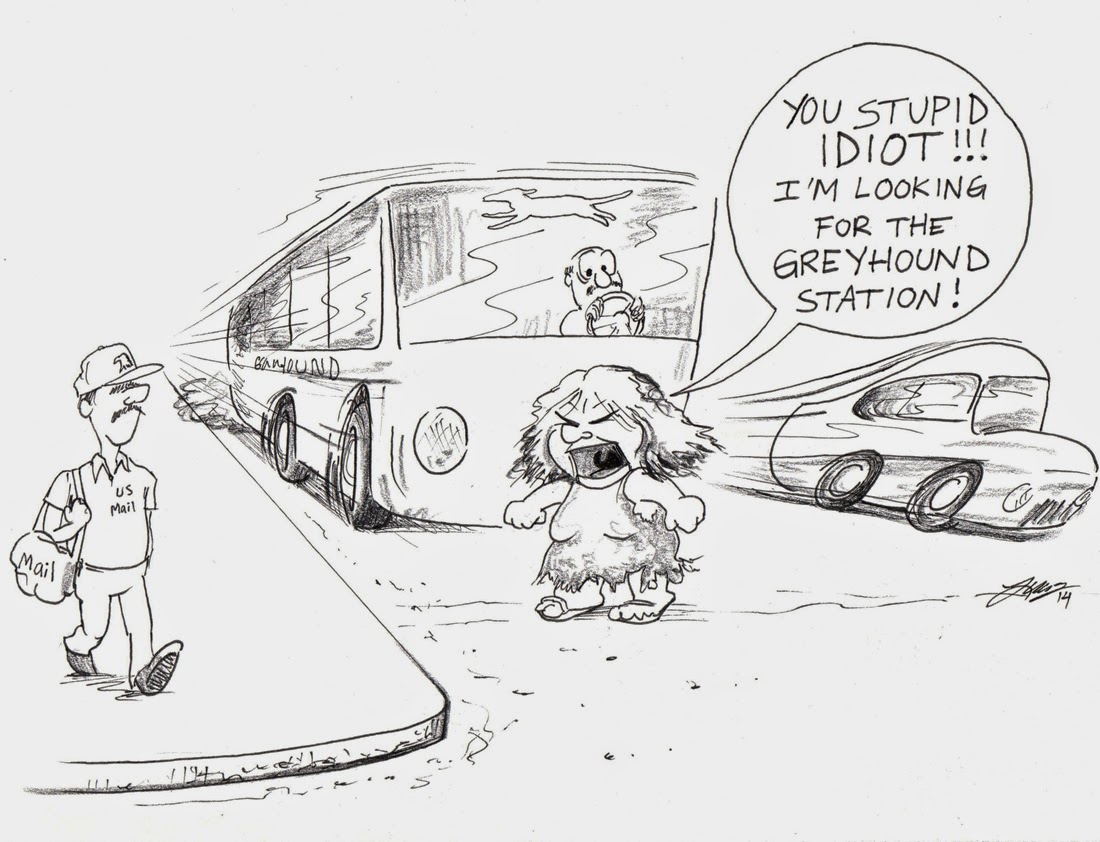
Doodle of the Day - Chasing the Greyhound

I witnessed a woman yelling at a guy on the street for no apparent reason. I suppose she could've been suffering from a mental illness. But still I had to draw it...


 To see all blog posts click HERE.

Monday, September 2, 2013

Doodle of the Day - Bring Your Own Bag

Many grocery stores in Los Angeles County are charging customers for grocery bags if they don't bring their own reusable bags. While this is an environmentally conscious trend to reduce plastics, here's its practical effect on guys like me...


To see other blog posts, click HERE

Monday, February 25, 2013

Two New Works and a Statement About Art

It's tempting and easy to come home after a long day of work, sit on the couch, watch tv, and veg out until it is time to wake up and repeat. But this is what they want; this is how the system and their messages are reinforced. Create 9-5 jobs (or in some cases 8-8 jobs), wages enough to stay afloat but not to own property. Bombarded with advertisements and consumerist culture, keep the masses hard at work, content, but afraid. Don't ask questions and don't create dissonance. Don't stray. Follow the herd, shut up, and keep up. 

Be the honest hardworking man. Such a noble and honorable-sounding idea. Yet, behind the scenes, corruption and contamination of power, degrees of power at all levels. The honorable hardworking man is too busy silently following the path to his grave. He fits the mold. The arts are neglected, and the artist is rejected.

I think of myself as an honorable hardworking man, and as an attorney in California, it is my duty to understand society, social policy, and the powers that be. But as an artist in Los Angeles, it is my duty to break the surface-cover, and explore the depths behind the masks. We as individuals are not sheep; we are more than the things we buy - we are layers upon layers with similarities, subtle differences, and striking contrasts.
    
Dimension, 30" x 28", oil on acrylic sheet, 2013:


Organism, 28" x 30", oil on acrylic sheet, 2013:


Thank you for reading about the paintings, sculptures, drawings, works in progress, reviews, Doodle of the Day, and other art by Los Angeles artist Lucas Aardvark Novak. To see older blog posts and other doodles, click HERE :)

Monday, February 11, 2013

Nocturne for the Lunar New Year

Continuing the series of abstract paintings on plastic sheeting, this is the latest completion. 


Nocturne 02-13, 30" x 28", oil on plastic sheet, 2013.

For the purposes of this series, I prefer plastic sheeting over canvas. The plastic sheet offers an ultra smooth surface, lacking any form of tooth that canvas has. Whereas on canvas the paint can be dragged with a brush just catching the tooth, the plastic surface picks up every brushstroke. The plastic sheet allows me to scrape away paint more effectively, or I can use a stiff dry brush to scumble through wet paint, to reveal the layers beneath and create delicate subtleties. 

In this painting, there is no representational image to latch onto, nor is there a rational explanation which I expect the view to get. But although abstract, the painting is a record of something.

I suppose the title Nocturne can be considered a reference to James Whistler who often painted scenes with titles similar to musical compositions. When Whistler was questioned by a lawyer who criticized one of his paintings for lacking beauty, Whistler responded, "What is the particular beauty of the picture? I don't think I could make it clear to you, any more than a musician could explain the beauty of a harmony to a person who had no ear."

Happy Lunar New Year, and thanks for viewing.

Thursday, January 24, 2013

The White Wolves


I paint when discussion is pointless, so I'm not interested in discussing a pictorial narrative, if one is suggested by this painting. Discussion is for logic and reason. I just assume shut up much of the time. Especially when it comes to art.

It's a bit ironic that the act of painting is, in theory, a way to simplify. It is an ancient act with primitive roots, yet the complexity of painting, with its infinite forms, mimics the complexities of life. 

The White Wolves, 25" x 40", oil on canvas, 2012-2013.

Monday, January 21, 2013

January - The Gray Painting

This is not a gray painting. It is numerous layers of colors, built up, scraped away, built up, and scraped away, to create subtle effects in texture and color. The abundance of gray is what makes other colors stand out, as in life, when ongoing neutrality is cut by highs and lows.

It was painted on plastic sheeting, and when flipped over, the several layers of different colors are visible from the early stages of the painting.

January, 32" x 44", oil on plastic sheeting, 2012-2013.

January, left detail:


January, right detail:


January, lower detail:


Thank you for reading about the paintings, sculptures, drawings, works in progress, reviews, Doodle of the Day, and other art by Los Angeles artist Lucas Aardvark Novak. To see older blog posts and other doodles, click HERE :)

Monday, January 7, 2013

Doodle of the Day - Check Yourself at the Self-Checkout

I often go to the hardware store to buy supplies. Recently, I was at Lowe's Home Improvement, that giant warehouse with just a few employees, and noticed the store only had one person working as cashier. The only other option was to use a self-checkout machine.

The line with the live cashier was a winding, slow-moving train of people with carts full of miscellaneous items, big and small. I only needed to buy a couple pieces of wood, so I opted to use the self-checkout machine. But the line for the self-checkout machine was surprisingly slow too. Technology ain't always what it's made out to be. The guy in front of me almost lost it...


Thank you for reading about the paintings, sculptures, drawings, works in progress, reviews, Doodle of the Day, and other art by Los Angeles artist Lucas Aardvark Novak. To see older blog posts and other doodles, click HERE :)

Wednesday, January 2, 2013

The Pendulum for the New Year

Aesthetic theories are popular among art critics and artists. Theories allow people to categorize art, take sides, and make arguments. But they are mostly pointless for those who wish to create good art. They create confines and false laws to follow. An artist should stand apart and recognize no law but the law that allows him to be himself.
- The Arts, Hendrik Willem Van Loon, 1937.

Continuing the pendulum series as the year 2013 arrives; it seems appropriate...

The Pendulum III, 27" x 35.5", oil on canvas, 2012:


The Pendulum II, 34" x 49", oil on canvas, 2012:


Thank you for reading about the paintings, sculptures, drawings, works in progress, reviews, Doodle of the Day, and other art by Los Angeles artist Lucas Aardvark Novak. To see older blog posts and other doodles, click HERE :)

Monday, December 17, 2012

Doodle of the Day - Dealing with Rejection

Ah, the inevitable rejection. It comes in all forms. Maybe I like to torment myself. Because I seek it out a lot.


To see older blog posts and other doodles, click HERE

Friday, December 14, 2012

Epiphany - Illustration for a Short Story

Epiphany is a story about impermanence, and it takes place on a different planet, in a different age. The main character is some form of a creature, perhaps beast-like, who faces an ambiguous yet surreal predicament. It is a short story by author, John Janda, who commissioned me to create this illustration...


Acrylic wash and graphite on paper, 14" x 11", 2012.

Thank you for reading about the paintings, sculptures, drawings, works in progress, reviews, Doodle of the Day, and other art by Los Angeles artist Lucas Aardvark Novak. To see older blog posts and other doodles, click HERE :)

Monday, December 10, 2012

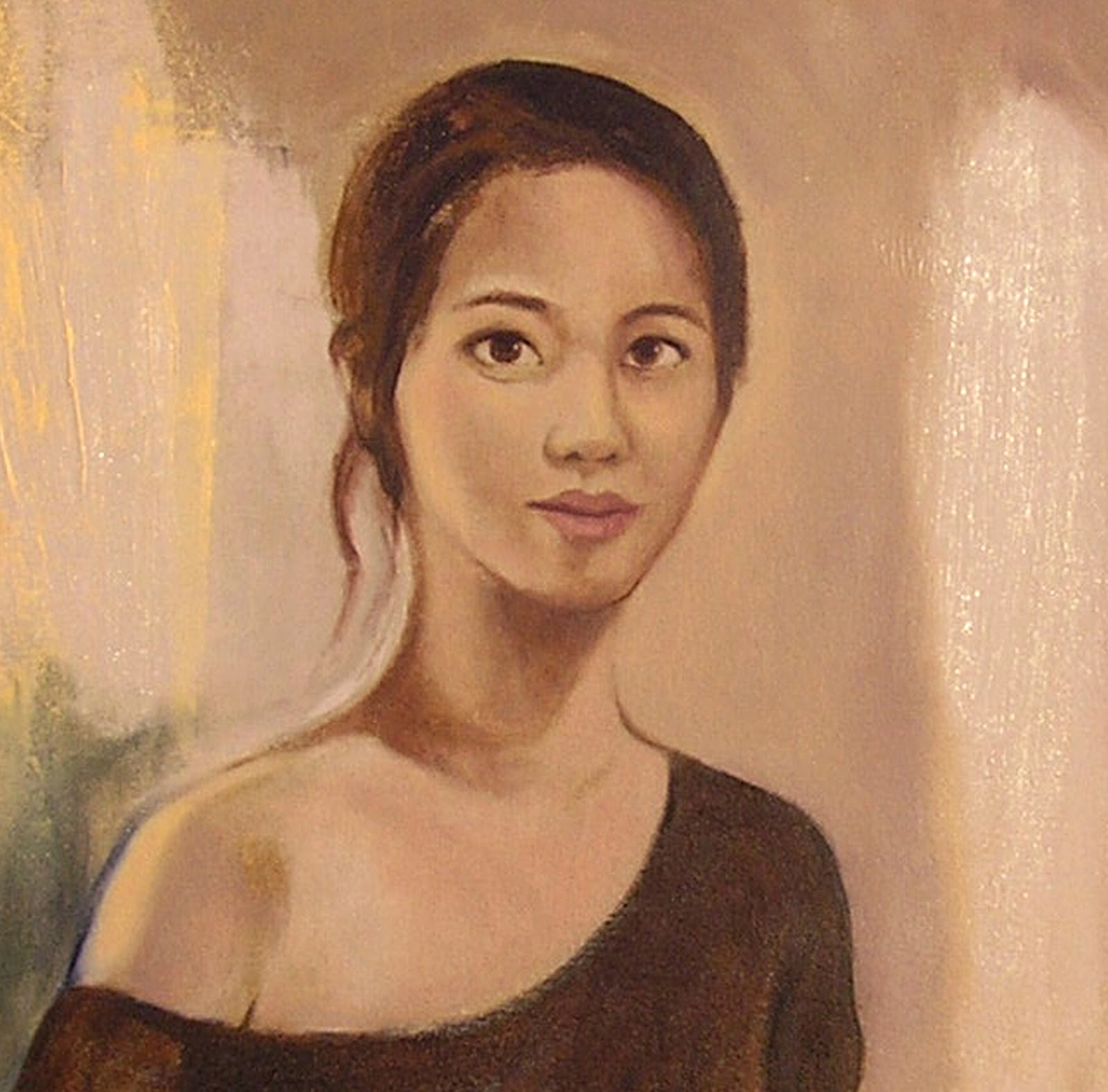
Portrait of a Woman in Los Angeles


This portrait measures 36" x 32", oil on canvas. In painting it, even though the subject matter is a portrait of a woman, I am not interested in making it photorealistic. I am more interested in creating subtleties in color and texture, incorporating abstraction and a variety of both loose and tight brushwork. 

In the contemporary art world, there are a number of artists, critics, and academics who dismiss the idea of oil on canvas portraiture. To them, the idea is too old fashioned and antiquated. Some make the same declarations about the idea of painting. But I believe dismissing the idea itself is to mistakenly judge a work of art before it is even created.

Painting is not for the impatient, and with new media and technology now available to almost everyone, those who want a quick fix will glance over painting, unsatisfied. But the limitations of the painting medium must be accepted. Within those limitations, regardless of the subject matter, there are infinite possibilities. I believe painting remains one of the most complex forms of art for an individual artist.

Because it is such a complex game within a confined field, it is not the ideal medium for everyone. And because it has been a form of artistic expression since primitive times, the expectations are high, and only a few painters will be remembered. Those of us who wish to take a stab at that glory don't have a choice anyway, so it doesn't matter what anyone says in the end. We will paint nonetheless.

As society continues to evolve, so does art, and so does painting. Painting will always be alive to show us how people of the past viewed the world.


Thank you for reading about the paintings, sculptures, drawings, works in progress, reviews, Doodle of the Day, and other art by Los Angeles artist Lucas Aardvark Novak. To see older blog posts and other doodles, click HERE :)

Wednesday, December 5, 2012

Doodle of the Day - The Origin of Cool

I think I figured out why smoking is undeniably cool. It traces back to our roots...


Thank you for reading about the paintings, sculptures, drawings, works in progress, reviews, Doodle of the Day, and other art by Los Angeles artist Lucas Aardvark Novak. To see older blog posts and other doodles, click HERE :)

Tuesday, December 4, 2012

Your Drawers Need To Be Ironed

A quote I like by Banksy goes like this: "All artists are willing to suffer for their work. But why are so few prepared to learn to draw?" It appears many artists today have the misdirected notion that the ability to draw accurately is obsolete. They convince themselves that, since their art is not representational, they need not practice the art of drawing. They reassure themselves by looking at recent art auction prices of contemporary art, like Jeff Koons’s Tulips which sold for $30 million, or Gerhard Richter’s abstracts regularly selling around a similar price. It is easy for artists to be convinced by the spotlighted outliers of the art market, driven by wealthy businessmen who treat art as commodities (or as “poker chips”). Add that academics continue to declare that intellect, concept, and cognitive value are most important in a work of art, artists today quickly disregard the importance of being able to draw accurately. (The phrase "draw accurately" does not necessarily mean in a photorealistic style.) I believe all art must carry a certain high level of craftsmanship, and the ability to draw accurately is the backbone of the craft.

It is easy to forget that artists like Picasso and Richter have produced work which demonstrates their ability to draw exactly what they want.

So, I practice drawing regularly, either in the form of doodles or quick sketches. It’s like going to the gym. Certain skills need to be ironed out periodically. The following is an example of a sketch, about 18 inches tall, of a friend who agreed to sit for me for thirty minutes. A time pressured sketch of a live person is usually a challenge, as it requires a quick grasping of shapes and efficiency of strokes with the pencil...


By they way, one of the greatest masters of efficiency of strokes with the paint brush, Diego Velazquez, has a painting at the special exhibition on Caravaggio currently at LACMA: 


Along with Georges de La Tour:


Thank you for reading about the paintings, sculptures, drawings, works in progress, reviews, Doodle of the Day, and other art by Los Angeles artist Lucas Aardvark Novak. To see older blog posts and other doodles, click HERE :)

Wednesday, November 28, 2012

Doodle of the Day - Be Mayan For Christmas

The talk of the year may be the end date of the Mayan calendar, December 21, 2012. Are we getting nervous? I was at the airport the other day and overheard some adults discussing it in front of children. It was simultaneously amusing and sad, and then this doodle was created...


Have a crazy December!
Cheers,
Lucas


Friday, October 19, 2012

Doodle of the Day - Inappropriate Owl


A very quick doodle for a Friday morning. Don't be offended.

Thanks for reading and enjoy the weekend.

Friday, October 12, 2012

Doodle of the Day - Flies in Wine

The date was 10-11-12. I suppose it was a day of celebration for some :)


Cheers and Happy Friday!

Thursday, October 4, 2012

The Retraction Abstraction


Some things are best not put into words. The Retraction 912, 36" x 28", oil on canvas, 2012.

Top left detail
Top right detail
Lower detail

Monday, October 1, 2012

Philadelphia Museum of Art: A Review of the Extraordinary and Observation of the General

In my return to the Philadelphia Museum of Art, my spirit mimicked Rocky's triumph as I spent the day exploring the dozens of different rooms instead of sitting in traffic in Los Angeles. I was, however, hoping for a larger collection of contemporary art, but I'd wager museums like this one are hesitant to display much contemporary work until the art has aged and proved to survive the decades. Nevertheless, this museum is an inspirational place, full of extraordinary works from over the centuries and around the world. And while this post is an attempt to understand and describe what I found to be inspirational in my quest, my observation of the other viewers at the museum also gave me insight into the world of art.


It seems that the general public wants to be sure they can like an artist, and in doing so they look for clues such as conservative subject matter, an art degree, or an artist's ability to draw realistically in the traditional western style. To the general public, these are easy guidelines to rely on when determining what artists are likable. But these guidelines are human fabrications, and while guidelines are good for a functional society, they don't necessarily transfer over to good art. 

People want structure in life. They want security. Generally, when the general public observes art, they prefer to see objects that they can imagine putting on their walls at home. But their homes are places of structure, security, and refuge. Most people want to decorate their homes and create comforts, and maybe this is a reason why the most trafficked areas at the museum were around impressionist and post-impressionist paintings (Monet, Renoir, Cezanne, Van Gogh, etc.) of gardens, flowers, boaters, pleasant women, and beautiful landscapes.

In the practice of law, indeed it is structure, logic, and reasonableness that are important. These are important in almost all aspects of society but often erroneously carry over to art appreciation. Humans are more complex than these artificial constructs and institutions, and art must therefore not be inhibited by such falsities.

Many successful artists have broken free of structures in creating work representative of the human condition. Museums continue to fill rooms with strange works that contradict feelings of warmth and safety of the home. Picasso was a great artist because he led the charge in tearing down certain walls and crossing boundaries with his wide range of inventing new styles. The viewer must also free himself of shackles. Painting must not be judged by its ornamental qualities.

The most obvious reaction I perceived came from a guy at the Cy Twombly room, located off the very end of the hallway of the "Contemporary and Modern Art" wing. Cy Twombly (1928-2011) was known for creating huge canvases covered in scribbles and scrawls using crayons and graphite. As I walked down the hallway toward the room, a guy was walking with a woman next to me. He said to her, "Let's see if there's anything else down here." He paced to the end of the hallway and glanced into the Twombly room, frowned, and immediately said: "No, there's nothing down here." And they left.

I kept walking and entered the room solo:


The following painting, called Fifty Days at Iliam: Achaeans In Battle (1978), shows Twombly's influence from Greek mythology.


I'm not writing this attempting to defend Twombly's work as good art, but I was more interested in the stranger's lightning quick decision to disregard the entire room before even setting foot in it. The graffiti-like scribbles did not conform to his traditional notions of what a painting should be, so he basically gave it the middle finger and stormed off.

Certainly museums would bore us to death if everything in it was an impressionist painting. What I appreciate about Twombly's work (perhaps symbolized by its location in the last room at the very end of the hallway) is that it sits at the end of the spectrum of the norm's expectation of what a painting should be. In that regard, his work is similar to the famous Fountain, by Marcel Duchamp, also at the Philadelphia Museum: 


As mentioned above,  the "Contemporary and Modern Art" wing didn't actually exhibit much contemporary art in my visit, but the museum did have a large room full of paintings by contemporary artist Sean Scully. I was previously unfamiliar with his work, but these giant paintings, created within the last decade, immediately captured my attention:


While the idea of rectangular fields of color reminded me of Rothko, the number of fields juxtaposed in two or three vertical or horizontal groups, almost like national flags, in varying shades, tones, and hues, resonated like a piano composition.


From a distance, the paintings may appear to merely consist of rectangles, but upon closer examination of the surface, more is to be discovered in the layers of paint and process of creation. The color fields are not flat; they are layered with soft and blurred edges, and they exemplify effective use of gray and mud-color in making others appear more vibrant. This is the stuff that ignites my fire:


Moving along to the rooms with old European paintings, I searched for the museum's revered Rubens, but when I found it, although masterful, my attention was drawn to a different piece in the same room, a large painting (approx. 6 feet x 10 feet) by Pacecco de Rosa from the year 1640, Massacre of the Innocents:  


While this dramatic biblical theme could be considered typical of Baroque art from that time period, this gruesome scene of murdering babies, detailed with blood, tears, and gray flesh, really is disturbing, perhaps one of the most shocking paintings I've seen:


But beyond the subject matter, the painting is perfect in its composition, lighting, facial expressions, surface texture, and switch between fine detail and wide brush strokes:
 

Further on the topic of religious themes, and in an effort to not write an entire book on my visit to the Philadelphia Museum of Art, I will conclude this post with a work from the Asian art section, a room from 16th century India dedicated to the Hindu god Vishnu:


Each pillar was created with its own unique stone carving of deities and lions. Together as a whole, with the dim lighting and centuries-old stone simultaneously depicting detail and deterioration, the artwork instills feelings that a higher power is present.


When I left the museum, I walked back to my hotel in the rain. I didn't have an umbrella, my brain was exhausted and my eyes were tired, but it didn't matter. While the art at the museum is undoubtedly inspirational, it is not impossible. Salvador Dali once wrote that "Before all else, it is absolutely necessary that at the moment when you sit down before your easel to paint your picture, your 'painter's hand' be guided by an angel." Since we're all equals on this planet, this shouldn't be a problem. 
Monday, September 17, 2012

Doodle of the Day - The Existential Sheep


Oh, you poor sheep...

Thank you for reading about the paintings, sculptures, drawings, works in progress, reviews, Doodle of the Day, and other art by Los Angeles artist Lucas Aardvark Novak. To see older blog posts and other doodles, click HERE :)

Wednesday, August 22, 2012

The Monsters At LACMA, And Chris Burden Art Review

The Inexplicable has prevented me from creating anything worth a damn lately. Maybe it's them dog days of summer that has my bones in a rut. I tried fighting it by going to a couple Los Angeles art galleries for inspiration, but the energy (or lack thereof) in the ones I visited simply got me tired. (On that thought, I wonder if a gallery kept a constant flow of pure oxygen into the display rooms, would this hype people up and increase sales even if the art sucks?)

In another attempt to lift my creative spirit, I decided to visit Los Angeles County Museum of Art. I probably should have started here. It's right down the street anyway. When I arrived to LACMA, I stared at the monstrous fossils of a mastodon in a tar pit just outside the building. When I left LACMA, I sensed that the dog days may be passing...


Chris Burden's Metropolis II is currently on display at LACMA in the Broad Contemporary Art Building. Burden is a Los Angeles artist with international recognition, probably most famous locally for his sculpture, Urban Light, a collection of 202 vintage street lamps tightly positioned in a grid at the entrance of LACMA.

Metropolis II represents a 21st century city and includes 1,100 custom designed cars, 18 highways, and a range of buildings and structures made of various materials. The vehicles and trains actually move, and apparently, every hour 100,000 cars circulate through Metropolis II. 

My first impression of the work reminded me of when I was a kid building my own tracks and environments with Hot Wheels cars or model trains, creating trees out of construction paper, building mountains out of cardboard, and using GiJoes to tear the place apart. What a joy it must've been to be Chris Burden creating this sculpture. But once I got past the "fun" of imagining the creation of the artwork on such a grand scale, I began to focus on the concept.


Metropolis II is a simple idea portrayed in all its complexity -- today's bustling city of roads, buildings, highways, speed, and noise. While it is unclear to me whether Burden himself embraces or rejects the 21st century city, his model reminded me of a title of a famous painting by Paul Gaugin: Where Do We Come From? What Are We? Where Are We Going?

I don't recall seeing one bush, one tree, or one natural living thing in Metropolis II. In the entanglement of metal beams, structures, and mechanisms, all we see is a mess of human fabrications. The natural world has been forsaken in the 21st century. Yet the piece as a whole resembles a living being with organs and a circulatory system. It is a giant monster...
 

On the topic of monsters, other art at LACMA that inspired me could also be categorized as extraordinarily frightful. The following are images of a skull rack sculpture and a memorial figure created by the Kerewa people of Papua New Guinea in the early 1900s:


While this Kerewa art may be considered hideous or grotesque, they possess the real, the truth, yet they convey the idea of supernatural powers. These were not forced creations, nor were they created for an art market. They were created based on passionate beliefs in life and death, and it shows.

And when I moved on to see some paintings, my attraction to the monsters continued...


The first is by Philip Guston and the second is by Willem de Kooning. Each artist is classified by art historians as abstract expressionist painters of the mid 1900s. In the choice of color and thick swaths of paint, these paintings are morbid, but when I came upon them, I stopped and stared. Something about the morbidity seemed natural.

Perhaps it was my mood, but I can't explain why I tended to gravitate towards the monsters. It seemed to be the theme for me, as these were the artworks I found to be inspiring. Maybe a byproduct of the Torment? I don't know.

Oh, and by the way, the most overrated piece at LACMA? Andy Warhol's tomato soup can. It's stupid.

Thank you for reading about the paintings, sculptures, drawings, works in progress, reviews, Doodle of the Day, and other art by Los Angeles artist Lucas Aardvark Novak. To see older blog posts and other doodles, click HERE :)